|
Increased
sales
Austin, Texas advertising@DomesticOilAndGas.com
Follow us on Twitter:
|
|
Increased
sales
Austin, Texas advertising@DomesticOilAndGas.com
Follow us on Twitter:
|
Domestic Oil and Gas
www.DomesticOilAndGas.com
What is
Domestic Oil and Gas?
Domestic oil and gas is simply oil and natural gas produced here in the U.S.A., by Americans, and NOT imported from foreign countries.
|
Amine Plants * Biomethane * Electric Compression * Gas Compressors * Gas Gathering * Gas Processing H2S
Removal
* Heater
Treaters
*
Midstream
Oil and Gas *
Pipeline
Compression
* Vapor
Recovery Systems
|


advertising@DomesticOilAndGas.com
American Energy Plan
sm
www.AmericanEnergyPlan.com
SAVES USA $1/2 Trillion EVERY
year that
we now spend buying FOREIGN OIL!
CREATES 3-5 million new AMERICAN jobs!
ENDS the need to buy oil from our ENEMIES.
SAVES the lives
of our brave boys protecting
other countries' oil resources.
American Energy Independence!
No Foreign Oil!
More about the "American Energy Plan"
The "American Energy Plan" will:
End America's addiction and reliance on "dirty oil" from OPEC, muslim/middle-east countries.
Make America Energy Independent
Creates 3-5 million new American jobs
Retains the >$500 billion in the U.S. every year, we now transfer to foreign countries to buy the "dirty oil" we need from countries that do not like us.
Abolish the Department of Energy
The FIRST step to a renewable energy future is to IMMEDIATELY END all foreign oil purchases, and putting Americans back to work producing America's oil! This will end the WORST DEPRESSION in American history and keep the $1/2 Trillion dollars we now send to OPEC / muslim countries for the oil we need. America produces oil cleaner and greener than ANY other country. And, by producing America's oil here, we save ENORMOUS amounts of greenhouse gas emissions that are generated when shipping foreign oil to the USA.
And all within 10 years!
How Much Oil is There in the USA?
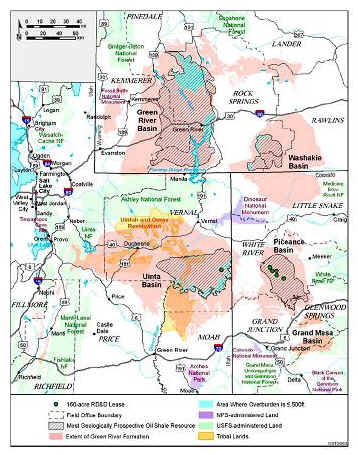
Recent
Department of Energy estimate the states of Colorado and Wyoming have
1.8 trillion barrels of oil that can be recovered with Steam Injection - an EOR technology
Energy
Investment Banking Services
___________________________________________
www.EnergyInvestmentBanking.com
Enhanced
Oil Recovery
www.EnhancedOilRecovery.com
* is the "green" way to produce
America's oil
* makes the U.S. energy independent
* ends the need for importing oil from the
Middle East
* 300 Billion barrels of oil recoverable through EOR in the USA
* $30 Trillion market opportunity in the U.S. (oil @ $100/bbl)
Domestic Oil and Gas Investments * Enhanced Oil Recovery * Upstream Oil and Gas Acquisitions
Amine
Units * Biomethane
* Electric
Compression
*
Gas
Compressors
* Gas
Gathering *
Gas
Processing H2S
Removal
* Heater
Treaters * Pipeline
Compression
*
Upstream
Oil and Gas * Vapor
Recovery
Domestic Oil and
Gas
advertising@DomesticOilAndGas.com
We deliver solutions:
Advertising
Business
Development
Marketing
strategies
Investor Relations
Public
Relations
Sales
plans
That produce results:
Increased
sales
New
customers
Greater
market share
Competitive advantage
Increased
shareholder value
Energy
Investment Banking
___________________________________________
www.EnergyInvestmentBanking.com

Support America's Domestic Oil and Gas resources and companies

“spending
hundreds and hundreds and hundreds of billions of dollars every year for
oil, much of it from the Middle East, is just about the single stupidest
thing that modern society could possibly do. It’s very difficult to think of anything
more idiotic than that.”
~ R. James Woolsey, Jr., former Director of the CIA
According to R. James Woolsey, for Director of the Central Intelligence Agency, “The basic insight is to realize that global warming, the geopolitics of oil, and warfare in the Persian Gulf are not separate problems — they are aspects of a single problem, the West’s dependence on oil.”
Recommended Sites:
Amine
Plants
www.AminePlants.com
Amine Sweetening
www.AmineSweetening.com
ASP Flooding
www.ASPflooding.com
Amine
Units
www.AmineUnits.com
BTEX
Removal
www.BTEXremoval.com
Carbon
Emissions
www.CarbonEmissions.com
Chemical
Flooding
www.ChemicalFlooding.com
CHP
Systems
www.CHPsystems.com
Clean
Power Generation
www.CleanPowerGeneration.com
CO2-EOR
www.CO2-EOR.com
CO2
Flooding
www.CO2flooding.com
CO2 Injection
www.CO2injection.com
CO2
Pipelines
www.CO2pipelines.com
Cogeneration
www.Cogeneration.net
Concentrated
Solar Power - CSP
www.ConcentratedSolarPower.com
Controls
Engineering
www.ControlsEngineering.com
Crude
Oil Storage
www.CrudeOilStorage.com
Cryogenic Plant
www.CryogenicPlant.com
Desiccant
Dehydration
www.DesiccantDehydration.com
Desulfurization
www.Desulfurization.com

NO FOREIGN OIL!
Support
Domestic Oil and Gas
www.DomesticOilAndGas.com
Electric
Compression
www.ElectricCompression.com
Emissions
Abatement
www.EmissionsAbatement.com
Emissions
Engineering
www.EmissionsEngineering.com
Energy
Investment Banking
___________________________________________
www.EnergyInvestmentBanking.com
Engineer
Procure Construct
www.EngineerProcureConstruct.com
Engineering
Procurement Construction - EPC
www.EngineeringProcurementConstruction.com
Engineering Feasibility
www.EngineeringFeasibility.com
Enhanced
Oil Recovery - EOR
www.EnhancedOilRecovery.com
Exploration and Development
www.ExplorationAndDevelopment.com
Exploration and
Production - E&P
www.ExplorationAndProduction.net
Flare
Gas Recovery
www.FlareGasRecovery.com
Fractionation Plant
www.FractionationPlant.com
Front
End Engineering Design - FEED
www.FrontEndEngineeringDesign.com
Front
End Loading
www.FrontEndLoading.com
Gas
Compression
www.GasCompression.net
Gas
Compressors
www.GasCompressors.net
Gas
Dehydration
www.GasDehydration.com
Gas
EOR
www.GasEOR.com
Gas
Flooding
www.GasFlooding.com
Gas
Gathering
www.GasGathering.com
Gas Liquefaction
www.GasLiquefaction.com
Gas Processing
www.GasProcessing.net
Gas
Sweetening
www.GasSweetening.com
Gas to Power
www.GasToPower.com
Geosystems Engineering
www.GeosystemsEngineering.com
Glycol
Dehydration
www.GlycolDehydration.com
Greenhouse Gas Emissions
www.GreenhouseGasEmissions.com
H2S Removal
www.H2Sremoval.com
Heater
Treater
www.HeaterTreater.com
Heat
Recovery Steam Generator - HRSG
www.HeatRecoverySteamGenerator.com
Helium
Recovery
www.HeliumRecovery.com
Joule
Thomson
www.JouleThomson.com
JT
Plant
www.JTplant.com
Liquefied
Natural Gas - LNG
www.LiquefiedNaturalGas.net
LNG
Liquefaction
www.LNGliquefaction.com
Methane
Recovery
www.MethaneRecovery.com
Microbial EOR
www.MicrobialEOR.com
Midstream Assets
www.MidstreamAssets.com
Midstream
Oil and Gas
www.MidstreamOilAndGas.com
Natural Gas Conditioning
www.NaturalGasConditioning.com
Natural
Gas Liquids - NGL
www.NaturalGasLiquids.net
Natural
Gas Treating
www.NaturalGasTreating.com
NGL
Recovery
www.NGLrecovery.com
Nitrogen Injection
www.NitrogenInjection.com
Nitrogen
Oxides
www.NitrogenOxides.com

NO FOREIGN OIL!
Support Domestic Oil and Gas Production!
Oil
Gathering
www.OilGathering.com
Pipeline Quality Gas
www.PipelineQualityGas.com
Polymer Flooding
www.PolymerFlooding.com
Polymer Injection
www.PolymerInjection.com
Pressure Swing Adsorption
- PSA
www.PressureSwingAdsorption.com
Reservoir Stimulation
www.ReservoirStimulation.com
Salt Dome Storage
www.SaltDomeStorage.com
Selective Catalytic
Reduction
www.SelectiveCatalyticReduction.com
Steam Injection
www.SteamInjection.com
Stranded Gas
www.StrandedGas.com
Surfactant EOR
www.SurfactantEOR.com
Surfactant Flooding
www.SurfactantFlooding.com
Terminalling
www.Terminalling.com
Tracer Testing
www.TracerTesting.com
Trigeneration
www.Trigeneration.com
Upstream Oil and Gas
www.UpstreamOilAndGas.com
Vacuum Swing Adsorption
- VSA
www.VacuumSwingAdsorption.com
Vapor Recovery
Unit
www.VaporRecoveryUnit.com
VOC Control
www.VOCcontrol.com
VOC Removal
www.VOCremoval.com
Waste Heat Boiler
www.WasteHeatBoiler.com
Waste Heat
Recovery
www.WasteHeatRecovery.com
#DomesticOilGas #DomesticOilAndGas #Oil #NaturalGas #NoForeignOil
__________________
Domestic Oil and Gas
www.DomesticOilAndGas.com

advertising@DomesticOilAndGas.com
DomesticOilAndGas.com
Copyright
© 2010
All Rights Reserved